Showing posts with label Core Phase. Show all posts

Saturday, October 29, 2011

How Children Learn - Art, Math & Other Things

Kids can use sharp tools?  Really?
p. 202  "I agree strongly with Mr. Wesley that even very young children should be given or have access to art materials of high quality, and shown how to use them carefully and well, just as we would show them how to use any other quality tools.  Freed of the limitations of bad tools, they can then begin to explore, express, and enlarge their own artistic powers.  We should not assume that they will be too clumsy, impatient, and uncaring to use these tools properly.  They are perfectly able to learn how to use many kinds of tools, including sharp woodworking tools, cooking tools, musical instruments, and cameras, that most people would insist they could not use."

Messing About
p. 219  Always let children have free play with materials before directing them.

The Montessori materials provide ample materials
for "messing about" with numbers and building up
a mental model of the territory.
p. 222 "Children need what we rarely give them in school--time for "Messing About" with reading--before they start trying to learn to read, to make the connections between letters and sounds.  They need time to build up in their minds, without hurry, without pressure, a sense of what words look like, before they start trying to memorize particular words.  In the same way, they need time for "Messing About" with numbers and numerals, before they start--if they ever should start--trying to memorize addition facts and multiplication tables.  They need to know how big 76 is, or 134, or 35,000, or a million.  They need to see, again without hurry or pressure, how numbers change and grow and relate to each other.  They need to build up a mental model of the territory before they start trying to talk about it.  We teachers like to think that we can transplant our own mental models into the minds of children by means of explanations.  It can't be done."

Crossing the line
p. 223 "Professor Hawkins rightly says, "All of us must cross the line between ignorance and insight many times before we truly understand."  Not only must we cross that line many times, but, in the words of the old spiritual, nobody else can cross it for us, we must cross it by ourselves.  Being shoved or dragged across does no good."

Children see the world as a whole and make their own connections according to their interests
p. 232  "[Children] see the world as a whole, mysterious perhaps, but a whole none the less.  They do not divide it up into airtight little categories as we adults tend to do.  it is natural for them to jump from one thing to another, and to make the kinds of connections that are rarely made in formal classes and textbooks.  They make their own paths into the unknown, paths that we would never think of making for them.  When they are following their own noses, learning what they are curious about, children go faster, cover more territory than we would ever think of trying to mark out for them, or make them cover.
 
Our task is to keep a child's curiosity well supplied with good food.
p. 233  "People have often said to me, nervously or angrily, that if we let children learn what they want to know they will become narrow specialists, nutty experts in baseball batting averages and such trivia.  Not so.  Many adults do this; the universities are full of people who have shut themselves up in little fortresses of artificially restricted private learning.  But healthy children, still curious and unafraid, do not learn this way.  Their learning does not box them in; it leads them out into life in many directions.  Each new thing they learn makes them aware of other new things to be learned.  Their curiosity grows by what it feeds on.  Our task is to keep it well supplied with food.

Keeping their curiosity "well supplied with food" doesn't mean feeding them, or telling them what they have to feed themselves.  It means putting within their reach the widest possible variety and quantity of good food--like taking them to a supermarket with no junk food in it (if we can imagine such a thing).

Thursday, October 27, 2011

How Children Learn - Reading

READING

Competence Models
p. 128  "It is certain that a child is greatly inspire and helped to learn by what are often called competence models--people who can do things better than he can.  But we ought to remind ourselves now and then that sometimes a competence model can be altogether too competent. . . No doubt it is exciting and inspiring for a child interested in athletics, or music, or dancing, or art or drama, or whatever, to see, once in a while, adults who do those things superbly well.  But as day-to-day examples, these experts are probably much less useful to a child than slightly older, slightly bigger children who do things slightly better than he can."

This is why having a big family can be so beneficial to children.  All but the oldest have a string of competency models that are just slightly above them.  How can I provide my oldest with less intimidating competence models than myself and dad?  Suzuki group lessons are a great opportunity for this in music.

The hard sell
p. 130  Beware of the temptation of the "hard sell."  "Children learn very early to be wary of too much adult enthusiasm."  Just leave the new materials or games lying somewhere and let the children approach them at their own leisure.


Encourage the spirit of independence in learning.
p. 132  When children reject our teaching. . . "Far from having decided that reading was not worth knowing, she probably wanted to learn to read very much.  What she rightly resented was my taking it upon myself to teach her without being asked.  When she learned to read, it was going to be by her own choosing, at her own time, and in her own way.  This spirit of independence in learning is one of the most valuable assets a learner can have, and we who want to help children's learning, at home or in school, must learn to respect and encourage it.

We don't forget the things we learn for our own reasons
p. 134  "The things we learn because, for our own reasons, we really need to know them, we don't forget."

Children learn by testing hunches over and over until they come to a knowledge of a thing.
p. 138  "Children's first hunches about anything are extremely faint and tentative, the merest wisps of intuition that a certain thing may be so.  Each time children test one of these faint hunches and have it confirmed by experience, the hunch becomes a bit stronger.  What we might call a 5 percent hunch becomes a 10 percent, the 10 percent, a 20 percent, and so, slowly, all the way to the point where they will say with conviction that they know that such -and-such is true."

But we can put an abrupt end to this process by constant testing and quizzing
p. 140  "Knowing this about children's hunches makes me understand more clearly than ever why, and how, our constant checking up on children's learning so often prevents and destroys learning, and even in time most of the capacity to learn. In How Children Fail, I said that the anxiety children feel at constantly being tested, their fear of failure, punishment, and disgrace, severely reduces their ability both to perceive and to remember, and drives them away from the material being studied and into strategies for fooling teachers into thinking they know what they really don't know.

Another reason: "Asking children questions about things they are only just beginning to learn is like sitting in a chair which has only just been glued.  The structure collapses.  Under pressure, children stop trying to confirm and strengthen their faint hunches.  Instead, they just give them up."

How much time is wasted "learning reading skills" and being tested on them, compared to time spent reading?
"I later knew a boy, taught at home by his parents (both of whom worked during the day), who did not begin to read until after he was eight.  When he was eleven he moved to a new town and wanted to go to school so that he could meet some other children, and also find out something about what school was like.  The school gave him the usual reading tests, on which he scored at the twelfth-grade level.  But of course he didn't have to spend hours a day being taught reading skills and being tested to be sure he had learned them.  He could use that time to read."

I find myself constantly tugging myself back from the edge of anxiety about Jonathan and the fact that he has been slower to read than many of his peers.  I need stories like this to confirm my faith that he will ultimately read when he is ready.

Children are not railroad trains.  Time and sequence is irrelevant to the learning process.
p. 155  "Timetables!  We act as if children were railroad trains running on a schedule.  The railroad man figures that if his train is going to get to Chicago at a certain time, then it must arrive on time at every stop along the route.  If it is ten minutes late getting into a station, he begins to worry.  in the same way, we say that if children are going to know so much when they go to college, then they have to know this at the end of this grade, and that at the end of that grade.  If a child doesn't arrive at one of these intermediate stations when we think he should, we instantly assume that he is going to be late at the finish.  But children are not railroad trains.  They don't learn at an even rate.  They learn in spurts, and the more interested they are in what they are learning, the faster these spurts are likely to be."

"Not only that, but they often don't learn in what seems to us a logical sequence, by which we mean easy things first, hard things later.  Being always seekers of meaning, children may first go to the hard things, which have more meaning, are (in Papert's word) less dissociated from the world--and later from these hard things learn the "easy" ones.  Thus children who read well certainly know a lot of "phonics," but they have probably learned at least as much phonics from words as they have learned words from phonics.   No one taught me that the letters PH say the sound "fff."  I figured it out, probably from hard words like "photograph" and "telephone."

Children do not need to be made to learn. . .
p. 157  "Children do not need to be made to learn, told what to learn, or shown how.  If we give them access to enough of the world, including our own lives and work in that world, they will see clearly enough what things are truly important to us and to others, and they will make for themselves a better path into that world than we could make for them."

This is hard doctrine to swallow, I know.  But deep down inside me I know it's true because it's true of me!  I learned how to read because my grandmother read fairy tales to me over and over again.  And I just figured it out!  On my own!  


Round pegs for round holes
p. 170  "When the then Labour Party prime minster James Callaghan said in a major public speech on education that what Britain needed was "round pegs for round holes," it was clear that this educational revolution had come to an end, and for just the same reasons that had put an end to all earlier revolutions of the same kind.  Needless to say, what children were or might be learning was not one of those reasons"

Back to cassette tapes
p. 172  "In many elementary school classrooms children dictate stories, directly or through a tape recorder, to their teacher, who writes out the stories and returns them to their authors.  For many children, these stories are much more exciting to read than some old book.  By such means many children who had not been at all interested in learning to read have become interested."

What a wonderful idea for a Christmas present!  I think I'm going to get Jonathan some cassette tapes.  I remember when I was a kid, hiding out in my room and making recordings of my own stories, game shows, etc.  It's a great outlet for creativity!!!


Tuesday, October 25, 2011

How Children Learn - Talk

John Holt
TALK


What makes two-year-olds so touchy?
p. 83  "I suspect that early infant talkers. . . mean to send messages with their voices, as the big people around them obviously do, and they think that these messages are being received.  Suddenly, perhaps around the age of one and a half or two, it dawns on them that most of their messages are not being received at all, and that they really can't talk like other people, but must go to a lot of trouble to learn how.  This may be one of the things that makes two-year-olds so touchy--they have just discovered that among all the other things they don't know how to do, they don't know how to talk.  They are bursting with things to say, needs, and feelings, and awarenesses, but have no way to say them.

Being willing to do things wrong
p. 84  "Every child learns how to make the sounds of his own language. . . How does he do it? . . .  The answer seems to be by patient and persistent experiment; by trying many thousands of times to make sounds, syllables, and words; by comparing his own sounds to the sounds made by people around him, and by gradually bringing his own sounds closer to the others; above all, by being willing to do things wrong even while trying his best to do them right."


How soon is this willingness gone?  Jonathan and Aaron both have expressed to me fear about new tasks because they want to do it RIGHT.  How much could we all learn if we were a little more like children?  This seems to me to be the crux of what Jesus meant when he asked us to be like little children.  


If we taught children to speak
p. 84-85 "Bill Hull once said to me, "If we taught children to speak, they'd never learn."

Stop quizzing kids!
p. 94-95  "Nor did I test him by saying, "What's this? What's that?"  This kind of checking up is not necessary, and it puts a child in a spot where he will feel that, if he says the wrong thing, he has done wrong and is in the wrong.  I have seen kindly, well-meaning parents do this to young children, hoping to help them learn.  Almost every time the child soon took on the kind of tense, tricky expression we see on so many children's faces in school, and began the same sad old business of bluffing, guessing, and playing for hints.  Even in the rare case when a child does not react his defensively to questions, too much quizzing is likely to make him begin to think that learning does not mean figuring out how things work, but getting and giving answers that please grownups."

p. 95 "A child's understanding of the world is uncertain and tentative.  If we question him too much or too sharply, we are more likely to weaken that understanding then strengthen it.  His understanding will grow faster if we can make ourselves have faith in it and leave it alone."

"This is particularly true of children just learning to read.  They have a lot of very tentative hunches about the connections between the look of printed letters and the sounds of spoken words.  If we give them enough time, they will gradually, as they read for pleasure, test and confirm and strengthen these hunches, and make them a part of what they really know.  But if we put too much pressure on these hunches, by continually asking children questions about what this or that letter says, we are liable to jar these hunches loose altogether and convince the children that they don't know anything, can't figure out anything, and must depend on us for all their information."

The "teacher devil" in me
p. 96 & p.98 Holt twice talks about ways to encourage speech development in children by talking through what you are doing on a daily basis. i.e. "Now we'll tie up this shoe; pull the laces good and tight; now we'll get the boots. . . "  However, he later corrects himself, saying that "I suspect that most people who try to talk this way to children will have so much more teaching in their voices than love and pleasure that they will wind up doing more harm than good.  If talk is not honest, does not have real feeling behind it--like most of the talk children hear on TV--they will not think of it as something they can or want to do themselves, and hence will learn little or nothing from it."  He was not at all happy about what he had previously written and later refers to the constant temptation to "teach" kids what they haven't already learned for themselves as "the teacher devil in me."

True observation can only occur in an atmosphere of trust.
p.104  Speaking of  research on the way children learn, Holt argues that "We cannot learn anything important about other people until they trust us."


This has particular bearing on a conversation I had with my brother-in-law the other day about how children learn.  He held up a book called, "Teaching with the Brain in Mind," which is a compilation of research on how better to teach children based on brain research.  Something bothered me at the time and it took until now for me to understand what bothered me so.  I was trying to explain to him that children, if given the proper environment, don't need to be "taught" at all.  They learn differently from adults in the sense that their minds are absorbent.  This idea isn't just espoused by Holt.  It is central to the theories of Sinichi Suzuki, Maria Montessori, Piaget, Erik Erikson, and Thomas Jefferson Education.  The difference between these and the brain researchers is that these people spent a huge amount of time being with and observing children in their natural habitat.  They gained the trust of the children they learned from.  Their work was a labor of love and in every respect represents true art--rising above pure science.  This is why I just don't even buy the whole "teaching with the brain in mind."  It's the teaching that's the fundamental false assumption underlying the entire theory.

The Myth of "Bad Habits"
p. 113  Correcting bad "habits" only deprives the child of the opportunity to identify and fix mistakes on their own.  The less they have to depend on us, the faster they can teach themselves.

p. 116 "A word to the wise. . . is infuriating."

Correcting children is not only unnecessary, it can be counterproductive
p. 118 "Many of us are tactful enough with other adults not to point out their errors, but not many of us are ready to extend this courtesy (or any other courtesy, for that matter) to children.  Yet it is important that we should, because they are perceptive and sensitive, and very easily hurt, humiliated, and discouraged."

"Answer Pulling"
p. 123 "The teacher asks a series of pointed questions, aimed at getting students to give an answer that he has decided beforehand is right.  Teachers' manuals are full of this technique--"Have a discussion, in which you draw out the following points. . ."  This kind of fake, directed conversation is worse than none at all.  Small wonder that children soon get bored and disgusted with it."

p. 124 "It can't be said too often: we get better at using words, whether hearing, speaking, reading or writing, under one condition and only one--when we use those words to say something we want to say, to people we want to say it to, for purposes that are our own."

Saturday, October 8, 2011

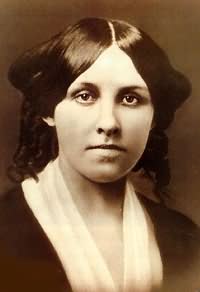
My Kingdom by Louisa May Alcott

Louisa May Alcott's poem about self government.  I'd like to memorize this one with the kids.  It touches my soul.


My Kingdom

A little kingdom I possess
where thoughts and feelings dwell,
And very hard I find the task
of governing it well;
For passion tempts and troubles me,
A wayward will misleads,
And selfishness its shadow casts
On all my words and deeds.

How can I learn to rule myself,
to be the child I should,
Honest and brave, nor ever tire
Of trying to be good?
How can I keep a sunny soul
To shine along life's way?
How can I tune my little heart
To sweetly sing all day?

Dear Father, help me with the love
that casteth out my fear;
Teach me to lean on thee, and feel
That thou art very near,
That no temptation is unseen
No childish grief too small,
Since thou, with patience infinite,
Doth soothe and comfort all.

I do not ask for any crown
But that which all may win
Nor seek to conquer any world
Except the one within.
Be thou my guide until I find,
Led by a tender hand,
Thy happy kingdom in myself
And dare to take command. 

Friday, October 7, 2011

Foundational Phases Lecture Notes

Part 1


The phases of learning are not a conveyer belt!
Core Phase: Foundational phase.  Influences everything in the other phases. You never leave it behind.  It will determine whether you have a successful scholar phase.
Love of Learning and Scholar phase depend upon and are always influenced by Core Phase.


Lessons of Core Phase: 
Play - Unscripted, Unstructured
Work
Good (Right vs. Wrong) -
Love (Relationships) - Learning how things are connected in the world, and their place in it.


Getting a great education is really about being able choosing the right.


Ghandi's Seven Social Sins

  • Wealth without Work
  • Pleasure without Conscience
  • Science without Humanity
  • Knowledge without Character
  • Politics without Principle
  • Commerce without Morality
  • Worship without Sacrifice

Lessons of Love of Learning
  • I can learn!

vs. Hate of Learning
  • I have to be forced to learn
  • Learning is stressful
  • Learning is so complicated that I can only learn with trained professionals walking me through it.
  • I don't know anything unless someone certifies that I do.
  • I'm probably wrong about the stuff I think I know.
  • I have to master this now or I'll be behind for the rest of my life.
  • Things I'm interested in are not important
  • Learning is one thing.  What I feel and experience is another.
  • When I am a mom/dad I will worry/beat myself up about what I am not doing and wonder if I should be doing what I'm doing.
  • When I am a mom/dad I will say I know something is the right thing and then constantly second guess my decisions.

Hate of Learning 2.0
  • I'm really great because I know how to read (do math, get good grades, etc.)
  • _____ is dumb because he can't read.
  • I'm cooler than ______ because I'm reading before him.
  • We work hard on reading because mom/dad want to prove they are good parents.
  • The most important thing I learn right now is skills.
  • The faster I grow up the better.
  • Once I am a mom/dad, I won't have to study anymore.
  • I really need to fit in
  • I really need to stand out.

Lessons of Scholar Phase
  • Gaining a sense of mission
  • Have a vision of who you want to become
  • Develop Scholar Skills
  • Develop abilities (character)

Part 2
What phase am I in?
To find out, ask yourself:  What do you do in your freetime?

For Children: 
Core Phase: PlayingLove of LearningCollecting things, building things, reading, etc.
It's okay to bounce back and forth.  It's not clear cut or a conveyer belt!

For Adults:
Core
  • Burn candle at both ends
  • Spend my free time being distracted (facebook???)
  • Life is chaotic, important relationships are strained.
Personal Core - I should be spending time in my core book every day.
Family Core - We should be spending time in our core book together every day.  Is there a lot of fighting/bickering/tension?  Need to take care of that.
Home Core  - Need systems to help the home run efficiently.

Love of Learning
  • Have fun with friends
  • Go on field trips
  • Hobbies, Closet full of unfinished projects
  • Try to read a ton of books you checked out from the library on a million topics
It's easy to get addicted to this phase or get stuck here.  Some LoL phase activities are better than others.
Sometimes you just need the freedom to enjoy a good  LoL phase
But you might be distracting yourself from some core issues.

Scholar Phase
  • Study
  • Apply yourself to careful practice
Part 3
TJed is based on naturally occurring developmental phases.   (Erikson, Piaget, Vygotski, Dewey)

Erikson's Phases of Development

To consider:
  • How well did you learn the appropriate lessons of each of Erikson's Phases?
  • How will these lessons contribute to a scholar phase?
  • Are my children learning these lessons?


Challenge:

  1. Ponder the Core Phase Inventory questions and journal your thoughts to do an inventory of the condition of your core. 
  2. What are your core values? Can you summarize what your core book teaches? Let's all give this one a try. Write it down.
  3. Make a plan or set a goal to live closer to your core values.
  4. Spend time daily in your core book. This is the most important challenge. Everything else is icing on the cake.

    Monday, August 22, 2011

    Family Work Article

    Recently on the TJed MUSE Yahoo Group, a link was posted to the following article entitled "Family Work" by Kathleen Bahr and Cheri Loveless. It was amazing inspiring to read, and gave me a whole new perspective and excitement for the work in our home that I have previously seen as drudgery. I want to keep it here as notes to refer back to. And hopefully, if I ever have readers, they will read it too.

    In addition, I read some sage advice from Andrea Rice of Abigail Adams Academy on the same Yahoo Group today. I needed to hear this, because I have fallen into a huge rut of high expectations, low output, and constant harping, nagging, and yelling to get work done. Not a recipe for happy family work time, eh?

    This is what she wrote:

    I have found that routines have to be based on what looks good in reality, not what looks good on paper. :) A routine should help you get done what needs to be done, but shouldn't be a slave master. I would keep working and trying different things until I got what worked for my family. But here are a few things that I find make our routine run smoother.

    1- make sure I do what I'm supposed to. Setting a good example goes a long way. I used to harp on my kids about keeping their rooms cleaned, wondered why they never did it and how to teach them to do it. Guess what-- I never cleaned my own room. I'm not saying my kids keep their rooms spick'nspan now, but I find that when I consistently set an example, they do much better.

    2- nagging doesn't work. Work beside them if they are having a hard time, especially very little ones. Donna Goff has written many very wonderful posts on this topic, also see Headgates for some pointers that may help.

    3- be realistic for your family. I used to try to get ALL our work done in the morning, but then it seemed our mornings were eaten up by work. So now we break up the work throughout the day. And with so many little ones, my home is not going to be dirt/dust/clutter free. I'm happy if its functional. I also found if we don't have breakfast until the morning chores, they get done a lot faster.

    4- every day is a new day. Yesterday you may have fallen off the wagon, but that doesn't mean today can't be great. Everyday doesn't have to be perfect. In the ingredients, Rachel DeMille says one day in ten is success!

    5- do everything with gratitude. My attitude is the key to how our day goes at our house. Being grateful for everything, even the littlest things, even the not so wonderful things, helps me keep it all in perspective.